
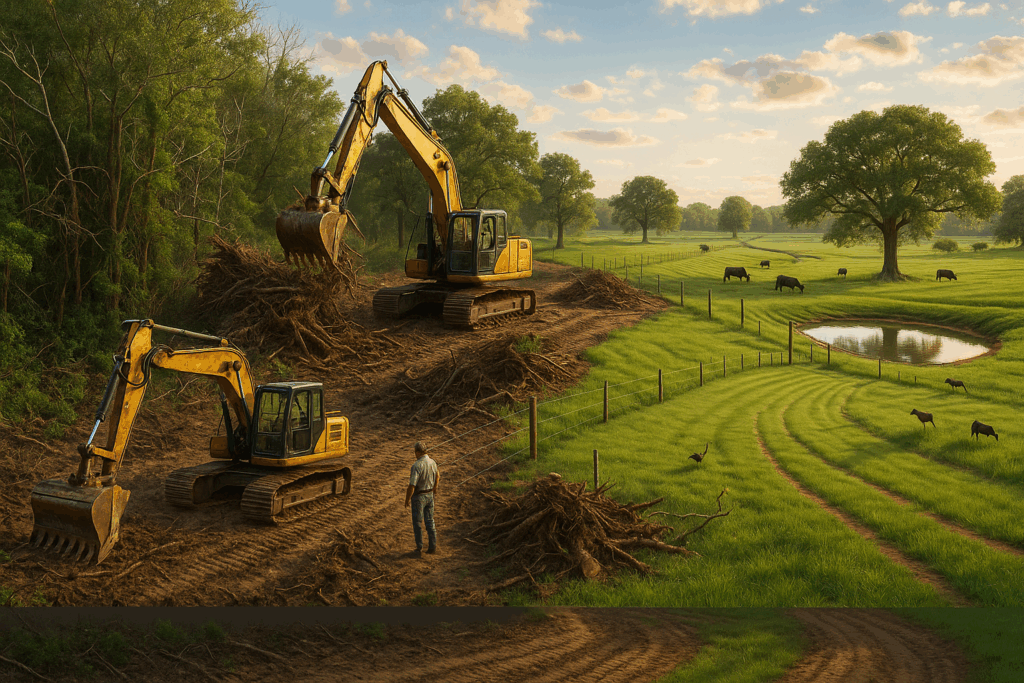
Why Thoughtful Pasture Development Is The Best Investment In Your Land
In our part of East Texas, we’ve all seen the difference between a rough, brushy patch and a well-managed pasture that practically glows with life. We’ve watched neighbors in Palestine TX turn tired, overgrown acres into productive grazing land that supports strong cattle, healthy wildlife, and better property values. That transformation doesn’t happen by accident—it comes from intentional, professional pasture development guided by a clear plan and the right equipment.
Our passion is helping landowners move from “just holding property” to truly harnessing its potential. When we talk about pasture development, we’re talking about much more than knocking down brush. We’re talking about shaping water flow, protecting your topsoil, choosing the right grasses, and setting your land up for decades of productivity. When those pieces come together, what used to be a tangle of briars and scrub can become a steady source of income and pride.
We’ve seen this story play out over and over again in and around Palestine TX, from small hobby farms to large cattle operations. No two properties are exactly the same, but the principles that turn brush into bounty are remarkably consistent. When you start with a strong plan, bring in the right team, and think long-term instead of short-term, your land begins to work for you instead of against you.
That’s the heart of professional pasture development: aligning what’s best for the land with what’s best for you, your livestock, and your goals. In the sections below, we’ll walk through how we approach these projects, the steps that matter most, and the results you can realistically expect when you invest in doing it right the first time.
From Brushy Acres To Productive Ground: Clearing With A Purpose
In our experience, this is where most landowners in Palestine TX start: standing in the middle of waist-high brush, looking at yaupon, sweetgum, cedars, and tangled vines, and wondering where to even begin. Pasture development begins with one core truth—clearing is not about “wiping the slate clean,” it’s about selectively opening up the land so the right plants can thrive and the wrong ones lose their foothold.
We’ve seen properties where someone took a dozer and simply “pushed everything,” leaving big piles of roots, stumps, and topsoil all mixed together. The result is often uneven ground that holds water in the wrong places, slows down regrowth of desirable grass, and invites erosion. Our approach is more strategic. We look at:
– What needs to be removed (invasive brush, junk trees, dangerous snags)
– What should be preserved (large oaks, shade trees, wildlife corridors)
– How water naturally wants to move across the land
– Where future roads, pens, ponds, or fences might go
By planning this at the start, we’re not just clearing—we’re sculpting.
On many pasture development jobs around Palestine TX, we use a combination of heavy equipment and surgical precision. Dozers and excavators take care of the big work, but we also consider:
– Whether root-raking is needed to reduce regrowth
– Where to stockpile or burn brush piles to avoid damaging good soil
– How to minimize compaction in future grazing areas
– Whether mulching equipment is a better option in sensitive spots
Done right, clearing opens the canopy to sunlight, breaks the dominance of brush species, and leaves you with a much cleaner canvas for planting and grazing.
Managing Stumps, Debris, And Topsoil
One of the most overlooked parts of pasture development is what happens after the first round of clearing. We’ve walked onto jobs where stumps were left high, root balls were scattered, and topsoil lay buried under clay and subsoil. That’s a recipe for headaches, broken equipment, and poor grass growth.
Our process focuses on three priorities:
1. Stump treatment:
– Pulling or grinding stumps in future hay or grazing fields
– Cutting lower and treating regrowth in areas where complete removal isn’t practical
– Ensuring equipment can travel safely across the field later
2. Debris handling:
– Placing burn piles in low-value areas away from creeks and drainage
– Preserving any usable logs for landowner projects or sale
– Spreading or removing leftover ash to prevent sterile “burn spots”
3. Topsoil protection:
– Pushing brush and stumps with the blade up to keep topsoil in place
– Avoiding deep cuts on sloped ground
– Using root rakes instead of solid blades where we want to keep soil structure
In Palestine TX, where heavy rains can arrive fast, keeping topsoil on your hilltops and slopes is critical. Once that soil washes away, you’re not just losing a season’s growth—you’re losing years of natural fertility. That’s why we build erosion control into pasture development from the very first pass of the dozer or excavator.
Timing Your Clearing For Best Results
Our weather patterns around Palestine TX matter. Clearing and pasture development work usually produce better results when we time it to:
– Avoid the heavy spring downpours on freshly exposed soil
– Give new grass seed enough moisture and warmth to establish
– Fit with your grazing and calving calendar
We often suggest major clearing work in late summer through winter. That gives us time to shape the land, handle debris, and prepare a seedbed ahead of spring rains and warmer temperatures. That timing also helps minimize regrowth pressure from certain brush species and gives newly seeded pastures the best start possible.
Shaping Water, Soil, And Slopes: Building A Strong Foundation
Once the brush is under control, our next focus in pasture development is the foundation your grass will grow on: water management, soil health, and surface grading. In our region, this is the difference between a pasture that fights you every year and a pasture that practically manages itself.
We’ve worked enough land in and around Palestine TX to know that water is either your biggest ally or your biggest enemy. When water shears soil off your slopes, stands in low spots, or cuts ruts through your pasture, you lose fertility, you lose grazing days, and you gain maintenance headaches. When water is guided gently off high ground, slowed down, and stored where it’s useful, everything changes.
Our approach begins with walking your land—often after a good rain if possible—and reading the story the water is already telling us. We look for:
– Existing erosion gullies or rills
– Bare spots where water has scoured topsoil
– Seasonal wet spots that could become ponds or tanks
– Natural ridges and swales that dictate flow paths
From there, we design simple but effective solutions using the tools we know work here in Palestine TX.
Better Drainage, Better Ponds, Better Pastures
With the dozer or excavator on-site, we can shape ground in ways that pay you back for years. Some of the common features we build into a pasture development plan include:
– Gentle regrading of problem areas to improve surface drainage
– Broad, shallow drainage swales that move water without cutting new ditches
– Properly sized terraces or waterways on steep slopes
– New or improved ponds or tanks that capture runoff instead of letting it escape
Well-built ponds offer multiple advantages:
– Reliable water for cattle or other livestock
– A way to slow and store runoff that would otherwise cause erosion
– Increased property value and recreational options
We’re careful to line up pond construction with how you plan to use your pastures. For example, we might recommend a pond at the edge of two future paddocks so both can access water, or we might suggest placing the pond where it can catch the most runoff from a particular watershed.
Soil Health And Erosion Control Strategies
Healthy soil is the engine of pasture development. We’ve seen land in Palestine TX that looked poor at first glance quickly come to life once we treated the soil right and protected it from further damage.
Some of the steps we consider include:
– Encouraging ground cover quickly:
– Planting fast-germinating grasses or cover crops on bare areas
– Using hay mulch or erosion blankets on steep or sensitive spots
– Testing and amending soils:
– Recommending soil testing through local ag extensions or labs
– Adjusting pH with lime where needed
– Suggesting phosphorus, potassium, or micronutrient inputs when soil tests show clear deficiencies
– Protecting slopes and waterways:
– Leaving grass buffers along creeks and drainage ditches
– Avoiding heavy equipment traffic on saturated ground
– Designing access roads and crossings that don’t turn into erosion channels
The best part is that these steps don’t just protect your land—they improve the carrying capacity of your pastures. When water sinks in instead of running off, when topsoil stays put, and when nutrients are balanced, your grasses become more resilient in drought and more responsive after a rain.
For landowners who want to learn more about soil testing and management, one helpful resource we often mention is the Texas A&M AgriLife Extension, which provides guidance specific to our state and region: https://agrilifeextension.tamu.edu/
Grass, Grazing, And Wildlife: Turning Open Ground Into A Working Pasture
Once the land is cleared and shaped, the next stage of pasture development is bringing in the right vegetation and management practices. In our area around Palestine TX, that usually means balancing improved forage grasses with the realities of our climate, soil types, and your specific goals—whether that’s beef cattle, horses, goats, hay production, or a mix.
We always start with your objectives. Some landowners want maximum grazing days for a cow-calf operation. Others are focused on hay production, while some want a more diverse, wildlife-friendly pasture that also supports a few head of cattle. Each goal points us toward different grass species, planting methods, and grazing strategies.
Choosing And Establishing The Right Grasses
The wrong grass choice can lock you into years of frustration. The right choice, combined with careful establishment, can turn a one-time investment into decades of productivity. Around Palestine TX, we commonly consider:
– Warm-season perennial grasses for base forage:
– Bermudagrass (in various improved varieties)
– Bahia in certain soil types
– Native warm-season grasses for lower-input systems
– Cool-season options to extend grazing:
– Annual ryegrass
– Small grains like oats, rye, or wheat
– Clover blends for added nitrogen and protein
Our job in pasture development is to prepare the seedbed or sprigging field properly. That often includes:
– Smoothing and firming the soil after clearing and grading
– Controlling any regrowth of brush or weeds prior to planting
– Ensuring proper seeding depth, rate, and coverage
– Timing planting around typical rainfall patterns in Palestine TX
We’ve seen projects where the landowner tried to broadcast seed directly into rough, cloddy ground with minimal success. A little extra effort up front—leveling, packing, and controlling competition—pays off in dramatically better establishment and a thicker stand.
Grazing Management That Protects Your Investment
Even the best planted pasture will fail if it’s overgrazed or grazed improperly, especially in the establishment phase. We always encourage new pasture owners to think of fencing and water layout as part of their pasture development plan, not as an afterthought.
Some strategies we commonly discuss with landowners include:
– Rotational or controlled grazing:
– Dividing larger pastures into 3–8 paddocks using cross fencing
– Moving cattle based on grass height, not a fixed calendar
– Allowing rest and regrowth periods that match the season and species
– Protecting new stands:
– Keeping livestock off newly seeded fields until roots are well established
– Starting with light, short-duration grazing to “train” the grass
– Avoiding grazing when soil is saturated to prevent pugging and compaction
– Integrating hay and grazing:
– Setting aside the best, flattest areas for hay production
– Grazing aftermath after hay is removed
– Planning equipment access to hay fields without damaging other paddocks
By building these ideas into the layout from the start—where you place gates, lanes, ponds, and fences—you make it easier to manage your animals and protect your forage. The result is more pounds of beef per acre, more consistent performance, and fewer bare spots and weeds.
Balancing Livestock And Wildlife
Many landowners in Palestine TX want more than just cattle—they want deer, birds, and other wildlife to thrive on their property. Professional pasture development doesn’t have to push wildlife out; it can actually improve habitat.
We often recommend:
– Leaving or planting native tree belts and shelterbelts
– Maintaining some brushy edges for quail and small game
– Including diverse grasses and forbs in certain areas
– Keeping some ponds and low-traffic zones as quiet wildlife refuges
When we plan clearing, we can deliberately leave certain thickets, mast-producing trees, and travel corridors intact while still creating broad, open pastures where you need them. That way, your land can support both a productive herd and the kind of wildlife encounters that make owning land special.
Real-World Results In Palestine TX: Planning For Long-Term Success
Over the years, we’ve helped landowners around Palestine TX walk through each phase of pasture development—from the first conversation, to the last load of debris, to the moment the first calves are grazing new grass. While every project is unique, the pattern of success tends to follow a similar path.
It starts with honest assessment: What is the land right now? What do you want it to be? What’s your realistic budget and timeline? From there, we put together a phased plan that tackles the highest-impact work first and leaves room for future improvements as your operation grows or your needs change.
We’ve seen properties that started with only a few acres of usable grazing turn into well-laid-out operations with:
– Thoughtful road and access layouts
– Multiple cross-fenced paddocks
– Well-placed ponds and tanks
– Carefully preserved shade and windbreaks
– Reliable, productive forage year after year
Those outcomes don’t happen by accident—they’re the result of conscious planning, experienced execution, and ongoing management.
Common Mistakes We Help Landowners Avoid
When we’re called in to “fix” a pasture development job that went wrong, certain issues come up again and again. By knowing them in advance, you can avoid expensive do-overs.
Some of the most common mistakes include:
– Clearing too aggressively:
– Removing every tree, leaving cattle with no shade
– Exposing steep slopes to erosion
– Eliminating wildlife cover that the owner later misses
– Ignoring water flow:
– Cutting roads straight up and down slopes
– Failing to plan for culverts or crossings
– Letting runoff carve deep ruts through new pastures
– Rushing planting:
– Seeding into unprepared soil and expecting a thick stand
– Planting the wrong species for the soil or use
– Skipping weed and brush control before establishment
– Overgrazing young pastures:
– Turning cattle in too soon and setting the stand back
– Grazing too hard during drought, stressing the root system
– Not resting paddocks long enough between grazings
By working with a team that understands how all these pieces fit together, you avoid wasting time and money and instead move steadily toward the pasture you’ve pictured in your mind.
Building A Long-Term Relationship With Your Land
We see pasture development in Palestine TX as the beginning of a long relationship between you and your land. The first round of clearing, grading, pond-building, and planting sets the stage. After that, it’s about observation, adjustment, and occasional tune-ups.
Over time, you might:
– Add or move fences as your herd size changes
– Renovate certain pastures with different grasses
– Expand a pond or improve water systems
– Thin regrowing brush while it’s still small and manageable
Because we’ve worked so many projects in this area, we understand how our soils, rainfall, and weather patterns shape what’s realistic and what’s not. That local knowledge helps us guide you toward choices that stand up over time instead of just looking good on paper.
If you live near Palestine TX and you’re looking at your land thinking, “I know this property can do more,” then you’re exactly the kind of person we love to work with.
From brush to bounty, professional pasture development is about unlocking that potential step by step, with a clear plan and the right equipment. You don’t have to tackle it alone, and you don’t have to guess your way through expensive decisions.
If you’re ready to see what your land could become with a thoughtful, experienced approach, we invite you to reach out and start the conversation today. You can learn more about what we do and contact us directly at https://westsdozer.com/ so we can walk your property, hear your goals, and design a pasture development plan that fits your vision and your budget.