
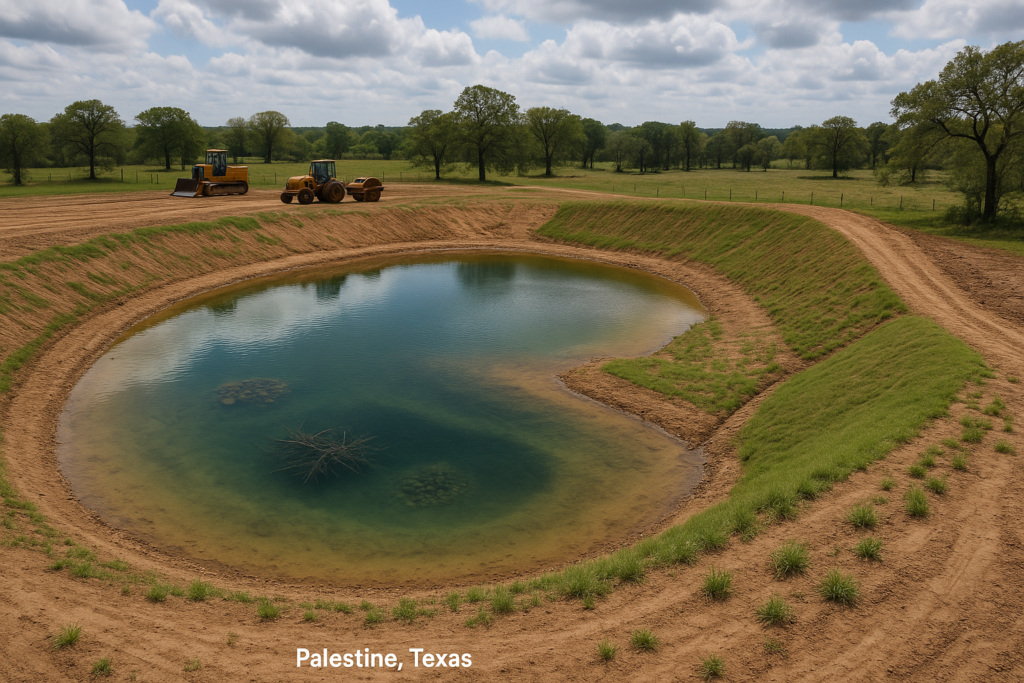
From Raw Ground To Reliable Water: Our Approach To Lasting Ponds
Our favorite projects here in Palestine TX start the same way: with a patch of bare dirt and a big vision. Maybe you want a quiet fishing spot, a dependable livestock pond, or a showpiece water feature for your property. Whatever the dream, our job is to turn that empty ground into a pond that holds water, looks beautiful, and stands up to Texas weather year after year. That’s where smart, science-based pond construction really matters.
We’ve seen too many ponds in our area that leak, silt in, or turn into muddy eyesores because corners were cut early on. So when we take on a new pond construction project, we treat it as a long-term water system, not just a big hole in the ground. That means starting with planning and design, following with careful dirt work and compaction, and then finishing with details that keep the pond healthy and usable for decades. In this article, we’ll walk through exactly how we do that here in East Texas.
Planning A Pond That Fits Your Land, Your Water, And Your Goals
Before we ever drop a blade in the dirt, we put most of our effort into planning. Good pond construction starts on paper and with boots on the ground, not with a bulldozer. In Palestine TX and the surrounding East Texas region, every property is a little different—soil types, slope, natural drainage, and tree cover all affect how your pond will perform.
Clarifying The Purpose Of Your Pond
We begin by asking what you really want from this pond. Your goals drive nearly every design choice we make.
Common goals we hear include:
– Fishing and recreation
– Cattle or livestock watering
– Wildlife habitat and waterfowl attraction
– Fire protection and emergency water storage
– Aesthetic “front yard” or “backyard” feature
Each purpose changes how we size and shape the pond:
– Fishing ponds work best with varied depths, structure for fish habitat, and a good balance between shallow and deep water.
– Livestock ponds need secure, stable access points and banks that won’t turn to muck or erode.
– Aesthetic ponds tend to emphasize shoreline curves, gentle slopes, and visibility from the home or gathering area.
By being honest about your primary and secondary goals up front, we can avoid building a pond that’s too shallow, too steep, or too small for what you really need.
Reading The Land And Water On Your Property
Once we know your goals, we walk the land. Our team studies:
– Natural drainages and low spots where water already wants to collect
– The slope and elevation changes that determine how we can build a dam or excavated basin
– Existing trees, stumps, fence lines, and utilities that might affect construction
– Access routes for heavy equipment and material hauling
In Palestine TX, we often deal with a mix of sandy loam, clay, and occasional rock. We pay close attention to where the clay is and how deep it goes, because that can make or break your pond’s ability to hold water.
We also think about how the watershed feeds your pond:
– Is the pond mostly runoff-fed from the surrounding land?
– Do you have a wet-weather creek or draw we can safely capture?
– Will the watershed be large enough to fill and maintain the water level without over-topping the dam during big storms?
We use basic runoff calculations and our experience with local rainfall patterns to estimate how much water your watershed can supply. It’s not complicated math, but it keeps us from building a pond that never fills—or one that floods your pasture or driveway every time we get a heavy rain.
Designing Shape, Depth, And Safety
With purpose and site mapped out, we sketch a design that fits both. Some of the key decisions include:
– Size and surface area
– Average and maximum depth
– Dam height and length
– Side slopes (how steep or gentle the banks will be)
– Emergency spillway location and capacity
For long-term durability, we generally:
– Aim for at least 8–10 feet of depth in part of the pond for fish survival and cooler summer water.
– Avoid extremely steep shorelines that are unsafe to walk and prone to erosion.
– Include a well-placed emergency spillway that lets excess water leave the pond in a controlled path rather than cutting around the dam.
When it all looks right on paper, we move to stakes and survey equipment in the field, laying out the exact location of the dam, shoreline, and key depths. That’s when the dirt work can truly begin.
Building The Foundation: Soil, Compaction, And Dam Construction
This is where pond construction either succeeds or fails. In our part of Texas, you can’t rely on luck and hope the ground will hold water. You need a properly prepared basin and a dam built like an engineered structure, even on a small ranch pond.
Clearing, Stripping, And Preparing The Pond Basin
We start by clearing the pond site:
– Removing trees, brush, and stumps
– Stripping topsoil and organic material from the dam area and basin
– Stockpiling topsoil for later use in finishing and seeding
Organic matter and loose, fluffy topsoil are the enemies of a tight, leak-free pond. They decompose, create voids, and let water find paths through the soil. We make sure the core dam area and keyway are tied into firm native subsoil.
In many spots around Palestine TX, we’re fortunate to have good clay below the topsoil. Where we have suitable clay, we:
– Expose it and stockpile it
– Use it as the main building material for the dam and pond liner
– Moisture-condition it (adding or drying water as needed) for ideal compaction
If your property doesn’t have enough suitable clay on-site, we may truck in quality clay material, or in some cases design a smaller pond that fits the good soils you do have.
Constructing A Dam That Holds For Decades
The dam is the backbone of the pond. We build it as if it were holding back more water than it will ever realistically see, because during a big storm, it just might.
Key steps in our dam construction process include:
1. Keyway trench
We cut a trench (the “keyway”) along the centerline of the dam down into firm, undisturbed subsoil. This creates a “key” that locks the dam into the ground and stops water from seeping underneath it.
2. Layered clay placement
We place clay in thin “lifts,” generally 6–9 inches thick, and compact each layer thoroughly before adding the next. This is critical: thick, un-compacted layers will settle unevenly and leak.
3. Moisture control and compaction
Clay compacts best at specific moisture levels. Too dry, and it won’t knit together. Too wet, and it squishes rather than locks up. We constantly assess and adjust moisture content, then compact using the right equipment—sheep’s foot rollers, dozers, or pads on excavators as needed.
4. Building freeboard and shape
We allow for “freeboard,” the vertical height from the normal water level to the top of the dam, so that heavy rains don’t overtop and erode it. We also shape the upstream and downstream faces to proper slopes for both stability and ease of maintenance.
A dam that looks big on day one might seem “too big” to the untrained eye, but we’ve seen what Texas storms can do. We’d rather be conservative in our design than ever risk a dam failure.
Pond Bottom, Side Slopes, And Sealing Techniques
While the dam gets a lot of attention, the pond basin itself needs just as much care.
We focus on:
– Creating smooth, even side slopes that resist erosion
– Avoiding sudden drop-offs that are dangerous for kids, livestock, or equipment
– Compacting the pond bottom in the same layered fashion as the dam in most soils
If we suspect potential seepage issues, we can:
– Add a thicker clay liner in critical areas
– Use a core trench around the pond perimeter
– In some rare cases, use bentonite or other sealing products to enhance water tightness
Our experience with pond construction on East Texas soils lets us tailor the approach. Some basins need intensive lining; others simply need proper moisture and compaction of the native clay. Either way, we’re building a foundation designed to hold water, not just a pretty hole in the ground.
Managing Water In And Out: Spillways, Inlets, And Erosion Control
A pond isn’t just a container; it’s part of your land’s natural drainage system. In Palestine TX, we get intense downpours and long dry spells. A pond that doesn’t manage flood flows and erosion correctly will quickly lose capacity, damage neighboring areas, or put your dam at risk.
Designing Safe, Reliable Spillways
Every pond needs a place for extra water to go. We treat spillways as critical safety features, not afterthoughts.
We typically design:
– A primary control point (often just the natural water level at the dam)
– An emergency spillway, usually a wide, shallow, vegetated channel cut into natural ground adjacent to the dam
The emergency spillway:
– Protects the dam from overtopping during big storms
– Directs water along a controlled path that won’t erode easily
– Is sized based on watershed area and local rainfall patterns
We aim for:
– Gentle slopes in the spillway to keep water velocities manageable
– Good turf grass cover (or rock armoring in high-velocity areas)
– A discharge point that doesn’t cause problems downstream, like cutting a neighbor’s driveway or flooding a low spot
By building a robust spillway during pond construction, we dramatically reduce the risk of dam damage during those “once every few years” gully-washer storms.
Controlling Inflow And Sedimentation
How water enters your pond matters just as much as how it leaves. Uncontrolled inflows can:
– Erode channels into your pasture
– Drop loads of sediment into the pond
– Bring fertilizers, manure, and pollutants that fuel algae growth
To manage inflows, we may:
– Shape and grade upstream ditches or swales to spread out water
– Install small check dams or rock riprap in key locations
– Create a shallow forebay area where sediment can settle out before reaching the main pond
For properties with high runoff or cultivated fields upstream, we sometimes recommend:
– Grass filter strips
– Small “silt trap” basins
– Adjustments to drainage patterns to reduce direct, muddy flows
All of this protects the long-term capacity and clarity of your pond. A well-designed pond in Palestine TX can easily outlast us if we manage sediment and erosion from the start.
Protecting Banks And Shorelines
Even once the pond is full, water, waves, livestock, and wind will all work on your shorelines. We design banks with these realities in mind.
Some of our go-to strategies include:
– Gentle slopes near high-use areas, especially where people or livestock will access the water
– Rock reinforcement (riprap) on vulnerable shorelines or around the dam face
– Strategic fencing and limited-access points for cattle to prevent trampling and shoreline collapse
We also plan for vegetation:
– Establishing hardy grasses quickly on the dam and spillway
– Avoiding large trees on the dam itself, which can cause leaks as roots grow and later rot
– Allowing or encouraging select plants in certain areas for wildlife habitat, while keeping key areas clear for maintenance and access
When banks are built right from day one, your pond is far less likely to develop muddy, collapsing edges or unsafe drop-offs.
Finishing Touches: Filling, Stocking, And Long-Term Care
Once the heavy dirt work is complete, the fun really begins. This is when your bare dirt hole becomes a true water feature—filling, greening up, and getting ready for fish, wildlife, and family memories. Our pond construction process doesn’t stop the day we park the dozer; we walk with you through the early months so you get off on the right foot.
Initial Filling And Water Quality
A new pond in Palestine TX may fill quickly during a wet season or take months through normal rainfall and runoff. As it fills, we pay attention to:
– Early leaks or wet spots on the backside of the dam
– Turbidity (how muddy the water looks)
– Bank stabilization and grass growth on the dam and spillway
Some short-term muddiness is normal, but we want to see:
– Sediment settling as vegetation establishes
– No visible signs of active erosion around the pond edges or in the spillway
– No continuous seepage trails beyond what we expect from a new clay structure “tightening up”
If needed, we can help with:
– Additional erosion control measures
– Recommendations for water clarifiers or best practices to improve water clarity
– Adjusting how and where water flows into the pond to reduce sediment loads
We want your new pond to be stable and healthy before you move into heavy use or fish stocking.
Fish, Habitat, And Recreation Planning
For many landowners, the dream is a stocked fishing pond right here in Palestine TX. That takes a little planning and patience.
We typically recommend:
– Allowing the pond to fill and stabilize before stocking
– Testing water quality if there’s any concern about runoff or upstream inputs
– Stocking forage species and game fish in the right sequence for a balanced population
Underwater habitat is just as important as fish:
– We can incorporate rock piles, ledges, and brush structure during pond construction.
– We may place fish attractors or spawning shelves in certain depth zones.
– We avoid placing structure so shallow it becomes a hazard for swimmers or boats.
By thinking about habitat while we’re still running equipment, we save you time and money later—and set you up for better fishing.
Long-Term Maintenance And What To Watch For
A well-built pond doesn’t demand constant work, but every water body benefits from a little regular attention.
We advise landowners to keep an eye on:
– Grass cover and bare spots on the dam, spillway, and banks
– Animal burrows (beavers, muskrats, or even crawfish in some lower areas) that can weaken dams
– Trees or brush starting to grow on the dam embankment
– Signs of unusual seepage or wet spots beyond what’s expected
Routine tasks might include:
– Mowing and spot-spraying to keep woody vegetation off the dam
– Periodic inspection after big storms to confirm the spillway is stable
– Occasional sediment removal from inflow areas or forebays if they were designed to collect silt
Handled early, most issues are small and inexpensive. Left alone for years, they can grow into serious problems that threaten both the pond and downstream areas. Our goal with every pond construction project is not just to build it, but to help you understand how to keep it strong and beautiful for the long haul.
Why Local Experience Matters For Pond Construction In Palestine TX
You can read books and watch videos about ponds all day, but there’s no substitute for local dirt under your boots. Our team has shaped, repaired, and built ponds across Palestine TX and Anderson County, and that local experience shows up in every stage of the process.
We’ve seen which soils seal easily and which fight back. We’ve worked through seasons of drought and years of heavy rain. We’ve fixed ponds that were built too shallow, too steep, or without a proper spillway. All of that has shaped how we approach new pond construction projects today.
A few local realities we always keep in mind:
– Soil variability: One corner of your property might be perfect clay, while 200 yards away is sandy soil that needs a different touch.
– Weather patterns: Our area’s intense storms demand robust dams and spillways, even on small ponds.
– Land use: Many properties around Palestine mix pasture, timber, and home sites. We design ponds that complement all three without causing drainage headaches.
We also understand that your pond isn’t just a construction project—it’s part of your lifestyle and property value. Whether you’re building a quiet retreat, a working ranch water source, or a statement water feature near your home, we respect the responsibility of shaping your land and managing your water.
If you’d like to dig deeper into what we do, how we build, and the other services we offer beyond ponds, you can learn more about West’s Services Dozer & Construction LLC at:
Ready To Turn Bare Dirt Into Your Own Dream Pond?
A lasting pond doesn’t happen by accident. It comes from careful planning, smart design, tight dirt work, and ongoing attention to water, soil, and safety. When we take on a pond construction project here in Palestine TX, we see it as a partnership with you and with your land—one that should still be paying off many years from now.
We start by listening to your vision, walking your property, and explaining what your land and soils will support. From there, we handle everything from clearing and dam construction to spillways, shoreline shaping, and early maintenance advice. Our goal is simple: a pond that fills, holds, and performs the way you hoped, season after season.
If you’re ready to explore a new pond, expand an older one, or fix a water feature that never worked quite right, we’re here to help. Reach out to us today through our website and let’s talk about your project, your land, and your timeline: